Italia. Huelga ferroviaria nacional puede provocar alteraciones en los trenes. 2 de octubre
|
|
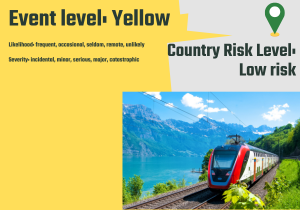
El transporte ferroviario italiano estará afectado por una huelga nacional entre las 11:00 y las 14:00 horas del 2 de octubre. Durante este periodo pueden registrarse cancelaciones, retrasos, modificaciones de horarios y cambios de recorrido en los trenes de alta velocidad, Intercity y regionales.
El alcance de las incidencias dependerá del seguimiento de la convocatoria por parte de los trabajadores. Los servicios de Trenitalia e Italo pueden verse afectados, aunque la programación concreta se conocerá con mayor precisión cuando se acerque la fecha.
Las alteraciones pueden continuar después de las 14:00 horas mientras se reorganizan los trenes y las tripulaciones. Los corredores que conectan Roma, Milán, Florencia, Bolonia, Venecia y Nápoles pueden registrar cambios, pero no se prevé el cierre general de las estaciones.
La huelga también puede afectar al Leonardo Express y a la línea regional FL1, que conectan con el Aeropuerto de Roma-Fiumicino (FCO), así como al Malpensa Express, que presta servicio al Aeropuerto de Milán-Malpensa (MXP). Los vuelos y la actividad de las terminales aeroportuarias no están incluidos en la convocatoria.
El transporte marítimo forma parte de la movilización, aunque todavía no se han confirmado los horarios de los paros ni las rutas afectadas. Los servicios de ferry pueden sufrir modificaciones que dependerán de cada operador.
- Consultar la programación de Trenitalia o Italo antes de acudir a la estación.
- Prever alternativas si el trayecto coincide con el horario de la huelga.
- Comprobar el funcionamiento de los trenes hacia los aeropuertos y considerar otros medios de transporte.
- Verificar directamente con el operador cualquier viaje previsto en ferry.
Italy. A national rail strike may cause disruption to train services. 2 October
Italian rail services will be affected by a national strike between 11.00 and 14.00 on 2 October. During this period, there may be cancellations, delays, timetable changes and route alterations affecting high-speed, Intercity and regional trains.
The extent of the disruption will depend on the level of participation by staff. Services operated by Trenitalia and Italo may be affected, although the specific timetable will be known in greater detail as the date approaches.
Disruptions may continue after 14:00 whilst trains and crews are reorganised. The routes connecting Rome, Milan, Florence, Bologna, Venice and Naples may be subject to changes, but no general closure of stations is expected.
The strike may also affect the Leonardo Express and the FL1 regional line, which connect to Rome-Fiumicino Airport (FCO), as well as the Malpensa Express, which serves Milan-Malpensa Airport (MXP). Flights and operations at airport terminals are not included in the strike action.
Maritime transport is part of the industrial action, although the timings of the stoppages and the routes affected have not yet been confirmed. Ferry services may be subject to changes, depending on the individual operator.
- Check the Trenitalia or Italo timetable before heading to the station.
- Plan alternative arrangements if your journey coincides with the strike.
- Check that trains to the airports are running and consider other means of transport.
- Check directly with the operator regarding any planned ferry journeys.
|
|
España. Continúa la huelga indefinida del sistema de equipajes en el aeropuerto de Madrid-Barajas. 1 de octubre
|
|

La huelga indefinida del personal encargado del mantenimiento del Sistema Automatizado de Tratamiento de Equipajes (SATE) continuará en el aeropuerto Adolfo Suárez Madrid-Barajas (MAD) hasta el 30 de noviembre. Los paros parciales pueden causar incidencias en la gestión de las maletas facturadas y en las conexiones entre vuelos.
La convocatoria afecta a 172 trabajadores. El Ministerio de Transportes y Movilidad Sostenible ha fijado servicios mínimos del 50% de la plantilla diaria programada para el mantenimiento del sistema, que presta servicio en las terminales T1, T2, T3, T4 y T4S.
Los paros se desarrollarán entre las 05:00 y las 07:00 horas y entre las 13:00 y las 15:00 horas. En octubre afectarán a los periodos del 1 al 5, del 8 al 12, del 15 al 19, del 22 al 26 y del 29 al 31. En noviembre continuarán del 1 al 2, del 5 al 9, del 12 al 16, del 19 al 23 y del 26 al 30.
La huelga corresponde al personal que resuelve averías y atascos del sistema, no a los servicios de facturación ni a la asistencia en rampa. Si se produce una incidencia durante los paros, su resolución puede requerir más tiempo y provocar esperas en las cintas de recogida o dificultades en la transferencia de equipajes entre vuelos. Los efectos también pueden prolongarse durante las horas posteriores.
- Comprobar el estado del vuelo y las indicaciones de la aerolínea antes de acudir al aeropuerto.
- Anticipar la llegada a la terminal cuando sea necesario facturar equipaje.
- Evitar conexiones ajustadas en Madrid-Barajas si es necesario recoger y volver a facturar las maletas.
Spain. The indefinite strike by baggage handling staff at Madrid-Barajas Airport continues. 1 October
The indefinite strike by staff responsible for maintaining the Automated Baggage Handling System (SATE) will continue at Adolfo Suárez Madrid-Barajas Airport (MAD) until 30 November. Partial work stoppages may cause disruption to the handling of checked-in luggage and to flight connections.
The strike affects 172 workers. The Ministry of Transport and Sustainable Mobility has set minimum service levels at 50 per cent of the daily scheduled workforce for the maintenance of the system, which operates in terminals T1, T2, T3, T4 and T4S.
The strikes will take place between 5.00 and 7.00 am and between 1.00 and 3.00 pm. In October, they will affect the periods from the 1st to the 5th, from the 8th to the 12th, from the 15th to the 19th, from the 22nd to the 26th and from the 29th to the 31st. In November, they will continue from the 1st to the 2nd, from the 5th to the 9th, from the 12th to the 16th, from the 19th to the 23rd and from the 26th to the 30th.
The strike involves staff responsible for resolving system faults and bottlenecks; it does not affect check-in services or ramp handling. If an incident occurs during the strike, resolving it may take longer and lead to queues at the baggage carousels or difficulties in transferring luggage between flights. The effects may also continue for several hours afterwards.
- Check your flight status and the airline’s instructions before heading to the airport.
- Allow extra time to arrive at the terminal if you need to check in luggage.
- Avoid tight connections at Madrid-Barajas if you need to collect and re-check your luggage.
|
|
España. Renfe detecta un acceso indebido en sus sistemas informáticos. 30 de septiembre
|
|
Renfe ha sufrido un incidente de ciberseguridad que permitió un acceso no autorizado a determinados sistemas relacionados con la venta de billetes. La circulación ferroviaria y los enlaces en tren con los aeropuertos continúan funcionando con normalidad.
La información potencialmente comprometida puede incluir datos identificativos y de contacto, números de DNI, NIE u otros documentos equivalentes, billetes adquiridos, viajes realizados y credenciales de acceso.
Los principales riesgos para los viajeros son el acceso indebido a cuentas y los intentos de fraude mediante correos electrónicos, mensajes o llamadas que aparenten proceder de Renfe. Estas comunicaciones pueden incluir referencias reales a reservas, trayectos anteriores, incidencias o supuestas compensaciones económicas para solicitar información personal, códigos de verificación o datos bancarios.
- Cambiar la contraseña de la cuenta de Renfe y modificarla también en otros servicios si se utiliza la misma.
- No facilitar contraseñas, códigos de verificación ni datos bancarios mediante correos electrónicos, mensajes o llamadas.
- Comprobar por canales oficiales cualquier comunicación inesperada sobre reservas, viajes realizados, incidencias o compensaciones.
- Vigilar la actividad de las cuentas y comunicar inmediatamente cualquier operación o acceso inusual a la entidad correspondiente.
Spain. Renfe detects unauthorised access to its IT systems. 30 September
Renfe has experienced a cyber security incident that resulted in unauthorised access to certain systems relating to ticket sales. Train services and rail links to airports continue to operate as normal.
The information potentially compromised may include personal and contact details, national identity card (DNI) numbers, foreign resident identity numbers (NIE) or other equivalent documents, tickets purchased, journeys made and access credentials.
The main risks for passengers are unauthorised access to accounts and attempts at fraud via emails, messages or calls that appear to come from Renfe. These communications may include genuine references to bookings, previous journeys, incidents or alleged financial compensation in order to request personal information, verification codes or bank details.
- Change your Renfe account password and update it on any other services where you use the same password.
- Do not disclose passwords, verification codes or bank details via emails, messages or phone calls.
- Verify any unexpected communications regarding bookings, past journeys, incidents or compensation through official channels.
- Monitor your account activity and report any unusual transactions or access immediately to the relevant organisation.
|
|
Italia. Huelga nacional de control aéreo provoca cancelaciones. 30 de septiembre
|
|

El personal de ENAV y Techno Sky desarrolla una huelga nacional de cuatro horas entre las 13:00 y las 17:00 horas del 30 de septiembre. La movilización puede reducir la capacidad del espacio aéreo italiano y provocar cancelaciones, retrasos, cambios de horario y desvíos en vuelos nacionales e internacionales.
ENAV presta los servicios de control del tráfico aéreo en aeropuertos y centros de control de área. Techno Sky mantiene los sistemas tecnológicos de navegación aérea, incluidas las comunicaciones, los radares y los equipos de asistencia al vuelo.
La convocatoria puede afectar a todos los aeropuertos del país. Milán-Linate (LIN), Nápoles-Capodichino (NAP) y Bari-Karol Wojty?a (BRI) cuentan además con movilizaciones locales durante la misma franja, lo que puede aumentar las incidencias en su operativa.
Los aeropuertos italianos con mayor volumen de tráfico, como Roma-Fiumicino (FCO), Roma-Ciampino (CIA), Milán-Malpensa (MXP), Venecia-Marco Polo (VCE), Catania-Fontanarossa (CTA) y Palermo-Falcone Borsellino (PMO), también pueden registrar retrasos, cancelaciones y cambios de horario. Las mayores restricciones afectarán a Bolonia (BLQ), Verona (VRN), Rímini (RMI) y Forlí (FRL), que no admitirán llegadas entre las 13:15 y las 17:15 horas ni salidas entre las 13:00 y las 17:00 horas. Además, los vuelos que atraviesen el espacio aéreo italiano sin despegar ni aterrizar en el país pueden sufrir retrasos o cambios de ruta.
ITA Airways (AZ) ha cancelado aproximadamente el 29% de los vuelos que tenía programados durante la jornada. Otras aerolíneas también pueden modificar sus horarios, por lo que conviene comprobar la situación de cada vuelo antes de acudir al aeropuerto.
Los vuelos protegidos deben operar en las franjas de 07:00 a 10:00 y de 18:00 a 21:00 horas. Las incidencias pueden continuar después de las 17:00 horas por la reorganización de aeronaves y horarios.
Los trenes de alta velocidad no están incluidos en la huelga y pueden utilizarse como alternativa en determinados trayectos nacionales.
- Comprobar el estado del vuelo con la aerolínea antes de desplazarse al aeropuerto.
- Confirmar si el vuelo figura entre los servicios protegidos o ha sido cancelado.
- Reservar más tiempo para las conexiones previstas durante la tarde y las horas posteriores a la huelga.
- Valorar los trenes de alta velocidad como alternativa en los desplazamientos nacionales.
Italy. National air traffic control strike causes cancellations. 30 September
Staff at ENAV and Techno Sky are holding a four-hour national strike between 13:00 and 17:00 on 30 September. The strike may reduce capacity in Italian airspace and lead to cancellations, delays, schedule changes and diversions for domestic and international flights.
ENAV provides air traffic control services at airports and area control centres. Techno Sky maintains air navigation technology systems, including communications, radar and flight support equipment.
The strike may affect all airports across the country. Milan-Linate (LIN), Naples-Capodichino (NAP) and Bari-Karol Wojty?a (BRI) are also facing local strikes during the same period, which may further disrupt their operations.
Italian airports with the highest passenger volumes, such as Rome-Fiumicino (FCO), Rome-Ciampino (CIA), Milan-Malpensa (MXP), Venice-Marco Polo (VCE), Catania-Fontanarossa (CTA) and Palermo-Falcone Borsellino (PMO), may also experience delays, cancellations and schedule changes. The most severe restrictions will affect Bologna (BLQ), Verona (VRN), Rimini (RMI) and Forlì (FRL), which will not accept arrivals between 13:15 and 17:15 or departures between 13:00 and 17:00. In addition, flights passing through Italian airspace without taking off or landing in the country may experience delays or route changes.
ITA Airways (AZ) has cancelled approximately 29 per cent of the flights it had scheduled for the day. Other airlines may also amend their timetables, so it is advisable to check the status of each flight before heading to the airport.
Protected flights must operate during the time slots from 7.00 to 10.00 and from 18.00 to 21.00. Disruptions may continue after 17.00 due to the reorganisation of aircraft and timetables.
High-speed trains are not affected by the strike and can be used as an alternative on certain domestic routes.
- Check the status of your flight with the airline before heading to the airport.
- Check whether your flight is one of the protected services or has been cancelled.
- Allow extra time for scheduled connections in the afternoon and in the hours following the strike.
- Consider high-speed trains as an alternative for domestic travel.
|
|
Francia. Alerta roja por inundaciones interrumpe trenes y dificulta los accesos a aeropuertos. 30 de septiembre
|
|

Gard y Hérault permanecen en alerta roja por lluvias e inundaciones hasta, al menos, la medianoche del 30 de septiembre. El episodio puede provocar inundaciones rápidas, desbordamientos y cortes de transporte.
El riesgo afecta inicialmente a las Cévennes y su entorno, incluidas Alès, Anduze, Le Vigan y Ganges, y se desplaza progresivamente hacia las llanuras y las áreas urbanas de Nîmes, Montpellier, Sète, Lunel y Mauguio. Varias carreteras y puentes están cerrados, mientras el transporte público departamental está suspendido en Gard y funciona parcialmente en Hérault.
La circulación ferroviaria está interrumpida durante toda la jornada en el eje Nîmes–Alès–La Bastide–Marvejols–Clermont-Ferrand. Los autobuses de sustitución están afectados por posibles prohibiciones de circulación. También pueden producirse suspensiones y retrasos en el corredor Aviñón–Nîmes–Montpellier–Sète.
Los trenes de alta velocidad que conectan París, Lyon, Marsella y Barcelona no están suspendidos de forma general, pero pueden registrar retrasos, desvíos o cancelaciones preventivas. El acceso a las estaciones de Nîmes y Montpellier también puede verse dificultado por las inundaciones y los cortes viarios.
Los aeropuertos de Montpellier-Méditerranée (MPL), Nîmes-Alès-Camargue-Cévennes (FNI) y Béziers-Cap d’Agde (BZR) permanecen operativos y no registran incidencias importantes confirmadas. No obstante, las tormentas, la visibilidad reducida y las dificultades en los accesos por carretera pueden causar retrasos o cancelaciones con poca antelación.
- Evitar los desplazamientos por Gard y Hérault mientras continúe la alerta roja.
- No circular por carreteras inundadas ni intentar cruzar puentes o pasos cerrados.
- Comprobar la circulación del tren o el estado del vuelo antes de dirigirse a la estación o al aeropuerto.
- Confirmar que los autobuses de sustitución permanecen operativos antes de iniciar el trayecto.
- Permanecer en un lugar seguro, alejado de ríos y zonas bajas, y no acceder a sótanos.
France. Red alert for flooding disrupts train services and hinders access to airports. 30 September
The Gard and Hérault departments remain on red alert for rain and flooding until at least midnight on 30 September. The weather event may cause flash flooding, river bursting their banks and disruption to transport services.
The risk initially affects the Cévennes and the surrounding area, including Alès, Anduze, Le Vigan and Ganges, and is gradually moving towards the plains and urban areas of Nîmes, Montpellier, Sète, Lunel and Mauguio. Several roads and bridges are closed, whilst departmental public transport is suspended in Gard and operating on a limited basis in Hérault.
Rail services are suspended for the whole day on the Nîmes–Alès–La Bastide–Marvejols–Clermont-Ferrand line. Replacement bus services are subject to possible traffic restrictions. Suspensions and delays may also occur on the Avignon–Nîmes–Montpellier–Sète route.
High-speed trains connecting Paris, Lyon, Marseille and Barcelona are not generally suspended, but may experience delays, diversions or precautionary cancellations. Access to Nîmes and Montpellier stations may also be hampered by flooding and road closures.
Montpellier-Méditerranée (MPL), Nîmes-Alès-Camargue-Cévennes (FNI) and Béziers-Cap d’Agde (BZR) airports remain operational and have not reported any confirmed major incidents. However, storms, reduced visibility and difficulties accessing these locations by road may cause delays or last-minute cancellations.
- Avoid travelling through the Gard and Hérault departments whilst the red alert remains in force.
- Do not drive on flooded roads or attempt to cross closed bridges or roadblocks.
- Check train services or flight status before heading to the station or airport.
- Confirm that replacement buses are running before setting off.
- Stay in a safe place, away from rivers and low-lying areas, and do not go into basements.
|
|
Bélgica. Esperas en el control de pasaportes del Aeropuerto de Bruselas. 30 de septiembre
|
|

El Aeropuerto de Bruselas (BRU) ha registrado esperas de hasta cinco horas en los controles de pasaportes para viajeros procedentes de fuera del espacio Schengen. La incidencia puede provocar la pérdida de vuelos de conexión, traslados reservados y enlaces ferroviarios desde la terminal.
Las colas están relacionadas con problemas técnicos y operativos del Sistema de Entrada y Salida (SES), que registra los documentos de viaje y los datos biométricos de las personas de terceros países que realizan estancias de corta duración. La menor disponibilidad de puertas automáticas obliga a derivar a más viajeros hacia los puestos atendidos por agentes.
Las esperas afectan principalmente a las llegadas desde países externos al espacio Schengen y no deben confundirse con las colas de seguridad del aeropuerto. Los vuelos entre países del espacio Schengen no suelen requerir un nuevo control de pasaportes, salvo que formen parte de un itinerario con entrada o salida por una frontera exterior.
También se han documentado incidencias importantes en el Aeropuerto de Ámsterdam-Schiphol (AMS), con esperas de aproximadamente 2 horas durante fallos recurrentes del sistema.
- Tener en cuenta posibles esperas prolongadas en el control de pasaportes al llegar desde países no Schengen
- Evitar conexiones ajustadas que exijan pasar el control de pasaportes antes del siguiente vuelo.
- Informar de posibles retrasos en reuniones, traslados o enlaces ferroviarios reservados después de la llegada.
- Consultar las indicaciones del aeropuerto y utilizar las puertas automáticas cuando el documento y la nacionalidad lo permitan.
Belgium. Queues at passport control at Brussels Airport. 30 September
Brussels Airport (BRU) has reported queues of up to five hours at passport control for travellers arriving from outside the Schengen area. This situation may result in missed connecting flights, pre-booked transfers and rail connections from the terminal.
The queues are due to technical and operational issues with the Entry/Exit System (SES), which records the travel documents and biometric data of third-country nationals on short-stay visits. The reduced availability of automated gates means that more travellers are being diverted to manned counters.
The delays mainly affect arrivals from countries outside the Schengen Area and should not be confused with airport security queues. Flights between Schengen Area countries do not usually require a further passport check, unless they form part of an itinerary involving entry or exit via an external border.
Significant incidents have also been reported at Amsterdam-Schiphol Airport (AMS), with waiting times of approximately 2 hours during recurring system failures.
- Please be aware that there may be lengthy queues at passport control when arriving from non-Schengen countries
- Avoid tight connections that require you to go through passport control before your next flight.
- Allow for possible delays to meetings, transfers or train connections booked after arrival.
- Check the airport signage and use the automatic gates where your document and nationality permit.
|
|
Brasil. Posibles incidencias de movilidad y mayor demanda de transporte. 4 de octubre
|
|

Brasil celebrará la primera vuelta de las elecciones generales el 4 de octubre. Los centros electorales funcionarán entre las 08:00 y las 17:00 horas, según el horario de Brasilia, lo que aumentará los desplazamientos durante toda la jornada.
En São Paulo, Río de Janeiro, Brasilia y otras grandes ciudades pueden producirse restricciones puntuales de tráfico, cambios en el transporte público y una mayor ocupación de autobuses, estaciones y terminales. Las concentraciones políticas y las manifestaciones pueden convocarse sin previo aviso, por lo que la situación de movilidad puede cambiar rápidamente.
En São Paulo, la congestión puede prolongar los accesos al Aeropuerto Internacional de São Paulo-Guarulhos (GRU) y al Aeropuerto de São Paulo-Congonhas (CGH). En Río de Janeiro, pueden aumentar los tiempos de traslado hacia el Aeropuerto Internacional de Río de Janeiro-Galeão (GIG) y el Aeropuerto Santos Dumont (SDU).
En Brasilia, las concentraciones en zonas institucionales, los dispositivos policiales y el aumento del tráfico pueden afectar a los trayectos hacia el Aeropuerto Internacional de Brasilia-Presidente Juscelino Kubitschek (BSB). No se han anunciado restricciones directas sobre los vuelos, pero los desplazamientos terrestres hacia las terminales pueden requerir más tiempo.
Bancos, comercios, oficinas y algunos servicios públicos pueden modificar sus horarios durante la jornada electoral. Si ninguna candidatura obtiene el resultado necesario, la segunda vuelta se celebrará el 25 de octubre y podrían repetirse las incidencias de movilidad. La investidura presidencial tendrá lugar en Brasilia el 5 de enero de 2027 y contará con un dispositivo de transporte y seguridad independiente.
- Comprobar el tráfico y el funcionamiento del transporte público antes de desplazarse al aeropuerto.
- Salir con mayor antelación en São Paulo, Río de Janeiro y Brasilia, especialmente durante las horas de votación y tras el cierre de los centros electorales.
- Evitar manifestaciones, concentraciones políticas y zonas sometidas a controles de seguridad.
- Confirmar los horarios de oficinas, comercios y servicios antes de iniciar el desplazamiento.
Brazil. Possible disruption to travel and increased demand for transport. 4 October
Brazil will hold the first round of the general elections on 4 October. Polling stations will be open from 8.00 am to 5.00 pm, Brasília time, which will lead to increased travel throughout the day.
In São Paulo, Rio de Janeiro, Brasília and other major cities, there may be occasional traffic restrictions, changes to public transport services and increased crowds on buses, at stations and at terminals. Political rallies and demonstrations may be organised at short notice, so travel conditions may change rapidly.
In São Paulo, congestion may cause delays on routes to São Paulo-Guarulhos International Airport (GRU) and São Paulo-Congonhas Airport (CGH). In Rio de Janeiro, journey times to Rio de Janeiro-Galeão International Airport (GIG) and Santos Dumont Airport (SDU) may increase.
In Brasília, gatherings in government districts, police operations and increased traffic may affect journeys to Brasília-Presidente Juscelino Kubitschek International Airport (BSB). No direct restrictions on flights have been announced, but ground journeys to the terminals may take longer.
Banks, shops, offices and some public services may alter their opening hours on election day. If no candidate secures the required majority, a second round will be held on 25 October and similar transport disruptions may occur. The presidential inauguration will take place in Brasília on 5 January 2027 and will have its own dedicated transport and security arrangements.
- Check traffic and public transport services before travelling to the airport.
- Set off well in advance in São Paulo, Rio de Janeiro and Brasília, particularly during voting hours and after polling stations have closed.
- Avoid demonstrations, political rallies and areas subject to security checks.
- Check the opening hours of offices, shops and services before setting off.
|
|
Colombia. Inestabilidad regional afecta a Norte de Santander y la frontera con Venezuela. 30 de septiembre
|
|

El riesgo de ataques de grupos armados ilegales ha aumentado en el departamento de Norte de Santander, especialmente en la región del Catatumbo y en las zonas rurales y fronterizas con Venezuela.
Los ataques pueden producirse con poca o ninguna advertencia. Los principales objetivos son estaciones de policía, edificios gubernamentales, instalaciones militares y otras infraestructuras relacionadas, por lo que conviene mantenerse alejado de sus proximidades.
El riesgo se extiende a todo Norte de Santander y a la franja de 10 kilómetros junto a la frontera entre Colombia y Venezuela. Los desplazamientos por carretera, especialmente en las rutas del Catatumbo, pueden quedar condicionados por incidentes de seguridad, controles o cierres repentinos.
El Aeropuerto Internacional Camilo Daza de Cúcuta (CUC) mantiene sus operaciones y no se han comunicado incidencias directas en los vuelos. No obstante, la situación puede dificultar los traslados terrestres hacia o desde la terminal, por lo que conviene comprobar el estado de la ruta antes de iniciar el desplazamiento.
- Evitar los viajes a Norte de Santander, especialmente al Catatumbo y a la zona fronteriza con Venezuela.
- Permanecer alejado de instalaciones policiales, militares, gubernamentales y otras infraestructuras sensibles.
- Evitar concentraciones y seguir las instrucciones de las autoridades locales.
- Comprobar la situación de las carreteras y el estado del vuelo antes de desplazarse al aeropuerto de Cúcuta.
- Mantener el teléfono cargado y activadas las notificaciones de emergencia.
Colombia. Regional instability affects Norte de Santander and the border with Venezuela. 30 September
The risk of attacks by illegal armed groups has increased in the department of Norte de Santander, particularly in the Catatumbo region and in rural areas and those bordering Venezuela.
Attacks may occur with little or no warning. The main targets are police stations, government buildings, military installations and other related infrastructure; travellers are therefore advised to stay clear of these areas.
The risk extends throughout Norte de Santander and along a 10-kilometre strip adjacent to the border between Colombia and Venezuela. Road travel, particularly on routes through the Catatumbo region, may be affected by security incidents, checkpoints or sudden road closures.
Cúcuta’s Camilo Daza International Airport (CUC) remains operational and no direct incidents affecting flights have been reported. However, the situation may make ground transport to or from the terminal difficult, so it is advisable to check the status of the route before setting off.
- Avoid travelling to Norte de Santander, particularly to the Catatumbo region and the border area with Venezuela.
- Stay away from police, military and government facilities, as well as other sensitive infrastructure.
- Avoid gatherings and follow the instructions of the local authorities.
- Check road conditions and your flight status before travelling to Cúcuta Airport.
- Keep your mobile phone charged and emergency notifications enabled.
|
|
Arabia Saudí. La tensión regional mantiene el riesgo de cierres y desvíos en aeropuertos. 30 de septiembre
|
|

La tensión regional continúa afectando a los desplazamientos aéreos en Arabia Saudí. El espacio aéreo del país permanece abierto y los principales aeropuertos mantienen servicios comerciales, pero la actividad militar y de defensa aérea puede provocar cierres temporales, desvíos, retrasos y cancelaciones con poca antelación.
La mayor afectación se concentra en el sur. El Aeropuerto Internacional de Abha (AHB), el Aeropuerto Internacional Rey Abdullah bin Abdulaziz de Jazán (GIZ) y el Aeropuerto de Najrán (EAM) han registrado cierres temporales frecuentes por la amenaza de ataques con drones y misiles.
La amenaza también se ha extendido hacia el interior del país, incluida Riad. La actividad de defensa aérea ha obligado a desviar aeronaves y ha causado retrasos significativos en vuelos con destino a Yeda. Pueden producirse nuevas alertas o suspensiones breves en los grandes centros aeroportuarios, aunque no existe un cierre permanente de alcance nacional.
Se desaconsejan los desplazamientos a zonas situadas a menos de 30 kilómetros de la frontera con Yemen. También conviene mantenerse alejado de instalaciones militares, energéticas y otras infraestructuras sensibles.
- Confirmar el estado del vuelo directamente con la aerolínea antes de iniciar el desplazamiento al aeropuerto.
- Mantener flexibilidad en las conexiones y prever posibles cambios de ruta o de aeropuerto.
- Revisar las opciones de regreso o cambio de itinerario si el viaje incluye Abha, Jazán o Najrán.
- Seguir las alertas de las autoridades locales y evitar las proximidades de la frontera con Yemen y de infraestructuras sensibles.
Saudi Arabia. Regional tensions continue to pose a risk of airport closures and diversions. 30 September
Regional tensions continue to affect air travel in Saudi Arabia. The country’s airspace remains open and the main airports are operating commercial services, but military and air defence activities may lead to temporary closures, diversions, delays and cancellations at short notice.
The greatest impact is concentrated in the south. Abha International Airport (AHB), King Abdullah bin Abdulaziz International Airport in Jazan (GIZ) and Najran Airport (EAM) have experienced frequent temporary closures due to the threat of drone and missile attacks.
The threat has also spread to the interior of the country, including Riyadh. Air defence activity has forced aircraft to be diverted and has caused significant delays to flights bound for Jeddah. Further alerts or brief suspensions may occur at major airport hubs, although there is no permanent nationwide closure.
Travel to areas within 30 kilometres of the border with Yemen is not recommended. It is also advisable to stay away from military and energy facilities and other sensitive infrastructure.
- Check the status of your flight directly with the airline before setting off for the airport.
- Allow for flexibility with connections and be prepared for possible changes to your route or airport.
- Review your options for returning home or changing your itinerary if your trip includes Abha, Jizan or Najran.
- Follow alerts from the local authorities and avoid the vicinity of the border with Yemen and sensitive infrastructure.
|
|
Tailandia. Las inundaciones provocan cancelaciones y retrasos en el aeropuerto de Bangkok. 30 de septiembre
|
|

Las inundaciones en Bangkok están provocando cancelaciones, retrasos y graves incidencias en la gestión de equipajes en el Aeropuerto Internacional de Suvarnabhumi (BKK). El aeropuerto permanece abierto y las pistas no están inundadas, pero parte del personal de tierra no ha podido llegar a su puesto de trabajo.
La mayor afectación se concentra en los servicios atendidos por Thai Airways (TG), que ha cancelado 37 vuelos. La aerolínea ha reducido entre un 30% y un 40% sus salidas habituales desde Bangkok durante varios días para estabilizar la operativa.
La acumulación de equipaje continúa saturando las cintas y las zonas de clasificación, lo que puede causar esperas de varias horas en la recogida de maletas y dificultar las conexiones que requieran transferir equipaje entre vuelos.
Otras aerolíneas están operando con mayor normalidad, aunque la congestión general y las condiciones meteorológicas pueden repercutir en sus horarios. El enlace ferroviario entre Suvarnabhumi y el centro de Bangkok no registra una interrupción relacionada con esta incidencia.
- Comprobar el estado del vuelo directamente con la aerolínea antes de desplazarse al aeropuerto.
- Evitar facturar equipaje cuando sea posible y llevar en cabina los artículos esenciales permitidos.
- Prever suficiente tiempo de conexión en Suvarnabhumi cuando sea necesario recoger o transferir el equipaje
- Comunicar inmediatamente cualquier retraso del equipaje a la aerolínea y conservar la referencia de seguimiento.
Thailand. Flooding is causing cancellations and delays at Bangkok Airport. 30 September
Flooding in Bangkok is causing cancellations, delays and serious disruption to baggage handling at Suvarnabhumi International Airport (BKK). The airport remains open and the runways are not flooded, but some ground staff have been unable to reach their workplaces.
The greatest disruption is centred on services operated by Thai Airways (TG), which has cancelled 37 flights. The airline has reduced its usual departures from Bangkok by between 30% and 40% for several days in order to stabilise operations.
The build-up of luggage continues to overwhelm the carousels and sorting areas, which may cause delays of several hours when collecting luggage and complicate connections that require luggage to be transferred between flights.
Other airlines are operating more normally, although general congestion and weather conditions may affect their timetables. The rail link between Suvarnabhumi and central Bangkok has not been disrupted by this incident.
- Check your flight status directly with the airline before travelling to the airport.
- Avoid checking in luggage where possible and carry permitted essential items in your hand luggage.
- Allow extra time for connections that require you to collect or transfer luggage at Suvarnabhumi.
- Report any luggage delays to the airline immediately and keep the tracking reference.
|
|
|